 by
by 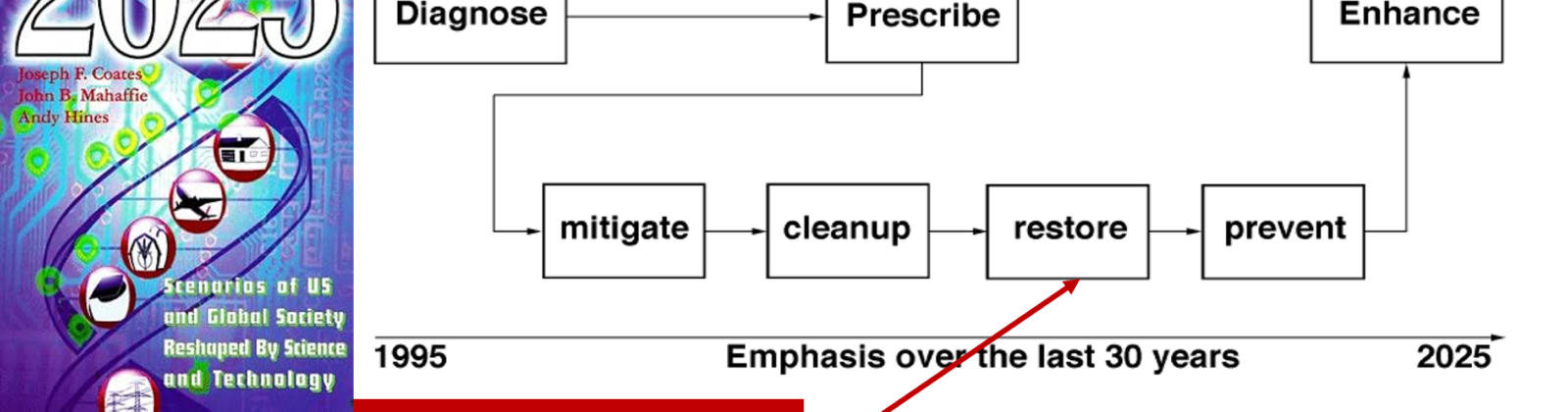
I was leafing through our 1995 book about the year 2025 and came across the figure on the Evolution of Environmental Strategies. We were still heavy in diagnosis in 1995 when we were writing. We moved into mitigation and cleanup over the next few decades. And finally, in the last few years, we’ve started to move to “restore,” which is very similar to today’s rewilding concept. [I wish we had been clever enough to think of rewilding back then … alas].
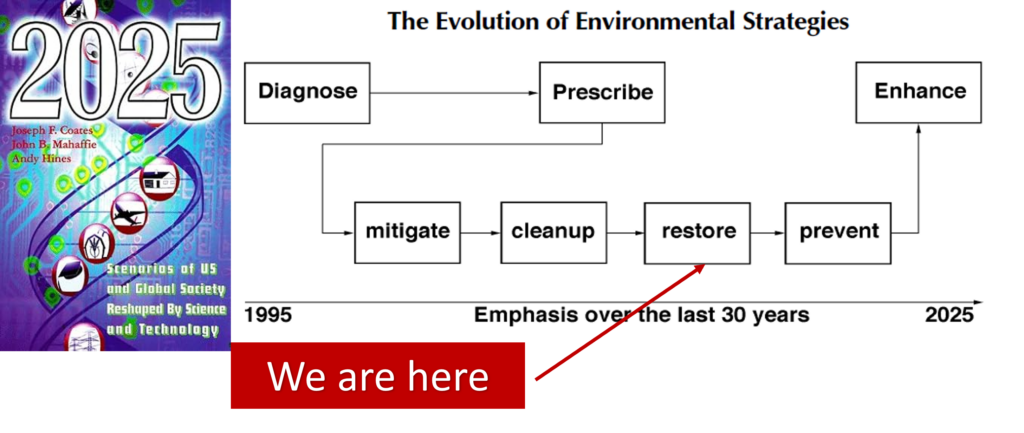
I dug in a little deeper and found that we mentioned restoration 30 times! I am super excited about rewilding. I posted on it about six months ago, and since then the rewilding scan hits seem to be pouring in – I’m sure in part because I am more sensitized to it as part of my After Capitalism work, but also because things are happening.
What’s fascinating to me as I look back on some of the projections from 30 years ago is how often we got the essence of a development right, but it took a slightly different form or name. Restoration or rewilding? I prefer the rewilding framing, but close enough. Now that I think of it, one could argue that rewilding is a bit too provocative for people and that maybe restoration is the safer term? Depends on the audience? Hmm.
It also reminds us to stick to our guns! Restoration and prevention seemed a bit “out there” thirty years ago. It can look like we’re way off early, but hang in there! We didn’t quite get to our projection yet … but we’re close and the logic holds. – Andy Hines

“Rewilding” has softened quite a bit in meaning since I first heard the term at a conference in the early aughts. That speaker was talking about using genetic and dna rescue techniques to bring saber toot tigers back to Texas (were there ever saber tooth tigers in what we now call Texas?) and mammoths, and more. I forget why he thought this was a good thing, beyond the exciting tech. But “rewilding” has changed over the years, now meaning much the same as restoration — plant natives, etc.
ha, we had bringing back the Mastodons in the 2025 book. I think more because we could rather than for any practical reason.