 by
by 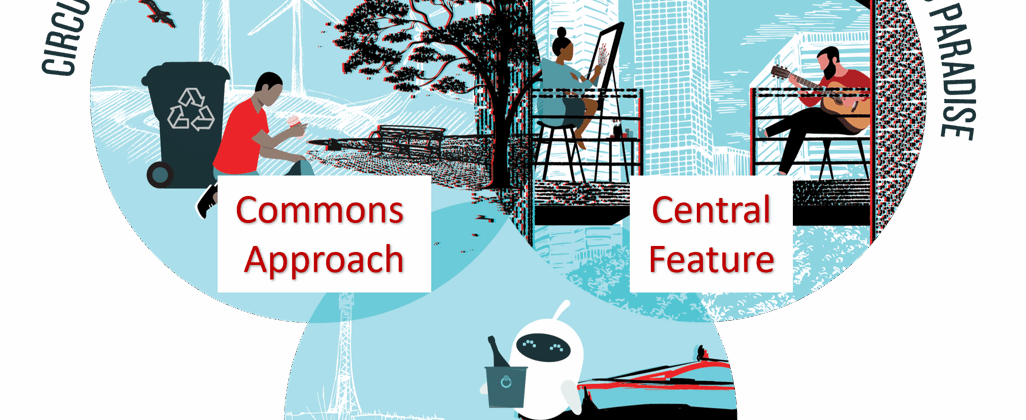
I am leaving this for last, as I see distribution at the core of any solution. The problem of capitalism and the solutions of After Capitalism involve distribution … on a gigantic scale. As we see the melodrama unfold on whether to pay one individual a trillion dollar salary, we must truly question the sanity of such a system. But let me reinforce here, capitalism is following its system logic – it is doing what it is designed to do. It is a system that produces a few big winners, a small percentage that do okay, and the rest fighting for scraps. The percentages can be dialed up or down a bit, but that’s what we’re getting. And as we pointed out with our #1 shift … Shifting Values , we are moving away from this as an acceptable bargain. Rethinking distribution is going to be difficult – the “winners” are not going to quietly agree to a change in distribution. We have a long fight ahead.
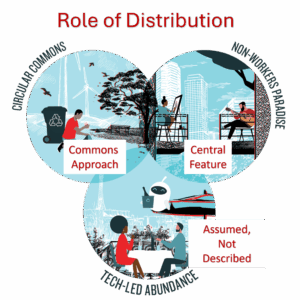
The three guiding images each address distribution:
- Tech-Led Abundance says technology will produce an abundance of wealth and resources so that distribution won’t be an issue, although it does not specifically address the how. It just sees it as a non-issue.
- Non-Workers Paradise is focused on the more equal distribution of wealth and suggests this will enable a post-work society. It acknowledges the role of technology in creating abundance, although it is very concerned about the transition in which workers are likely to lose jobs to automation.
- Circular Commons focuses more on the distribution of resources and says we should use and share rather than consume and accumulate.
Capitalism is based on the idea that resources are scarce and therefore access to them must be carefully managed. But we have an abundance already! We recently explored the idea that we are already in abundance; that we have enough for everyone on the planet to live comfortably if resources were divided evenly. The problem is not scarcity, it is our mindset. It is assumed that abundance means individual material goods accumulation, but what if it meant collective well-being instead? That reframing would change the game. Of course we would still have a tremendous amount of work to do to enable resource distribution that would provide a comfortable life for all – we are a long way from it. But we futurists are patient and play the long game. The point of guiding images is to have the sense of where we want to go, and take the steps to get there. It won’t be easy, but failure to change is likely to be much worse, and it is a prize worth pursuing. — Andy Hines

Leave a Reply