 by
by 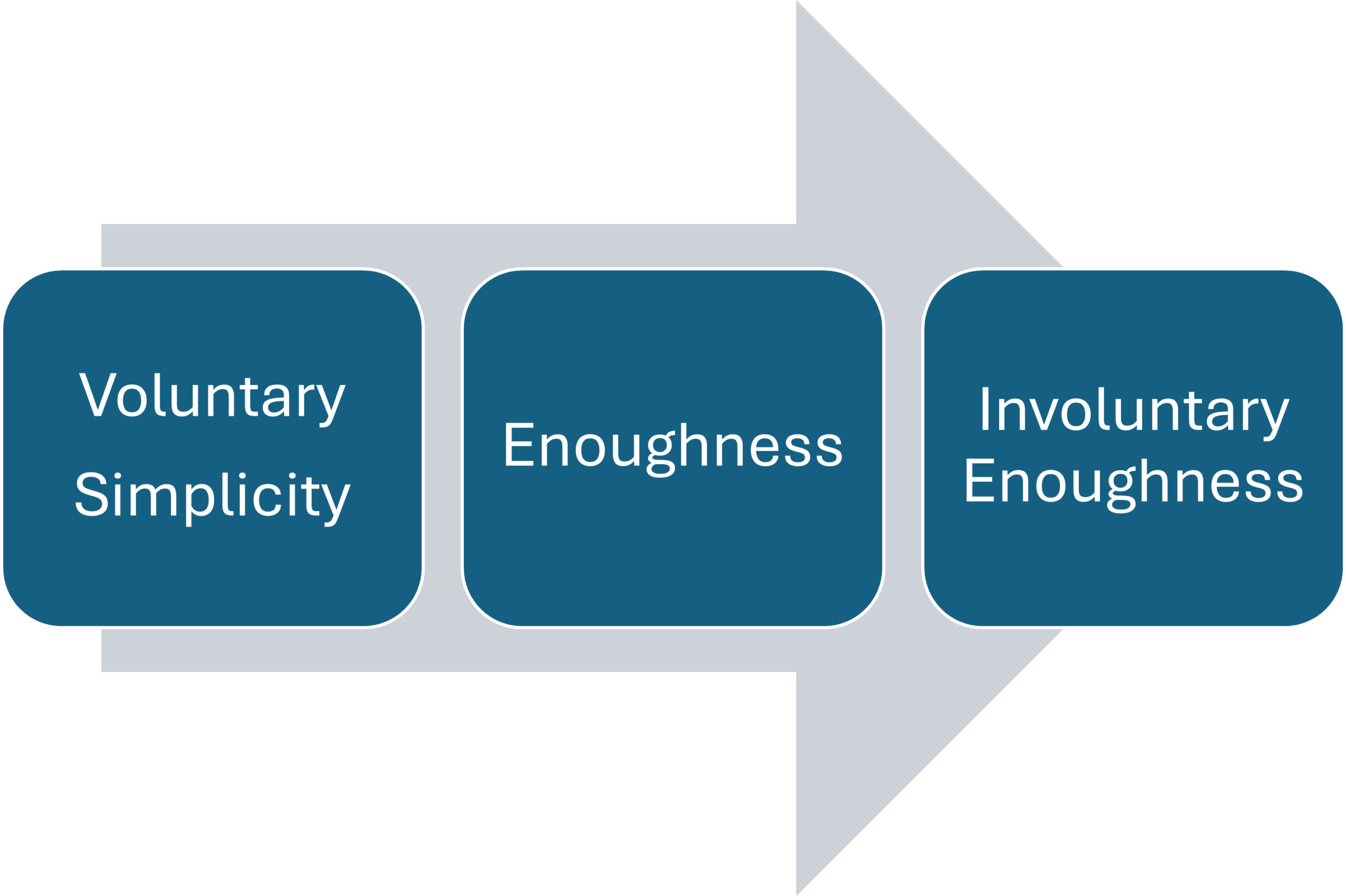
I wrote and talked a lot about Enoughness when I was in the midst of my Values work about a dozen years ago. I cited Enoughness as one of the five key changes of the consumer landscape in my 2012 ConsumerShift book
Enoughness came back to my attention in the last few years in doing the After Capitalism research, in particular thinking about values that might be useful … for the journey.
I dug back for the origins. It was interesting to remind myself that I had defined Enoughness in 2012 as a reframing of simplicity. I had heard a futurist colleague in Australia, Marcus Barber, talk about Enoughness, and I thought, that’s it! I described Enoughness as a reframing of voluntary simplicity: whereas voluntary simplicity suggested a benevolent, altruistic adoption of a simpler lifestyle, Enoughness gets to a similar end point, but only partly from choice, as necessity in the form of the Great Recession at the time was mixed into the equation.
Enoughness was an update of futurist Duane Elgin’s Voluntary Simplicity concept that was popular back in the 1980s. They key word is voluntary. It was about a relatively small group of people choosing to simplify their life as a lifestyle choice. It expressed hope that more people would see the benefit of this choice. It seemed to stay with a relatively small group. My thought was that maybe this evolution to Enoughness would reach a wider audience. Arguably true, but certainly not mainstream.
And now, Involuntary Enoughness. Yet another futurist colleague, this time Mina McBride, shared that phrase recently, and once again I said, “that’s it!” Enoughness says it’s part necessity and part choice. Something has been shifting however. What if Enoughness is really not a lifestyle choice any more? What if we are reaching the point where it’s forced upon us? Where must live a simple life, like it or not? These questions in part arose from observing consumption patterns in a context where it seems many people are living beyond their means. This brings us to element of choice in lifestyle, and why are we making the choices we are making? [To be clear, Enoughness is focused on those with the means to choose.]
In closing, have we let the window of lifestyle choice re: Enoughness close because we failed to act in time? We futurists always suggest to our clients that it is best to act sooner rather than later, as our options narrow as time passes. Ready or not, is Enoughness coming? — Andy Hines.

Leave a Reply